CV6 (Qihai) — Sea of Qi
CV6, known as Qihai or Sea of Qi, is one of the most important energy points on the body. Located on the lower abdomen, it is used for vitality, digestion, and immune strength — fatigue, low energy, sluggish digestion, and a tendency to feel cold.
At a Glance
| Meridian | Conception Vessel (CV / Ren Mai) |
|---|---|
| Body region | Lower abdomen, on the midline about two of your own finger-widths below the navel |
| Best for | Fatigue and low energy, sluggish digestion, immune support, feeling cold, recovery after illness |
| Difficulty | Easy — reachable lying down with light pressure |
| Hold time | 1–2 minutes per session, in slow circles |
| Frequency | 1–2 times daily, preferably in the morning |
| Pairs well with | CV4 (Guanyuan), ST36 (Zusanli), KI1 (Yongquan) |
| Skip if | Pregnancy, recent abdominal surgery, or a full bladder / heavy meal |
Why CV6 Matters
CV6 is one of the most important energy points on the body, and its position on the lower midline explains why. It sits on the Conception Vessel about two finger-widths below the navel, in the zone classically linked to energy, or qi, and vitality. Because the abdomen holds the points used most often for digestive concerns — bloating, indigestion, constipation, and nausea — CV6 serves both low energy and an unsettled digestive system.
In the traditional model, lower-abdomen points regulate the smooth flow of qi for the stomach and intestines, and CV6 is described as directly stimulating intestinal activity and strengthening digestive fire. On a physical level, gentle abdominal pressure can relax the belly wall and support the natural rhythm of digestion — if the belly is relaxed and settled, not full.
Where Is This Point Located?
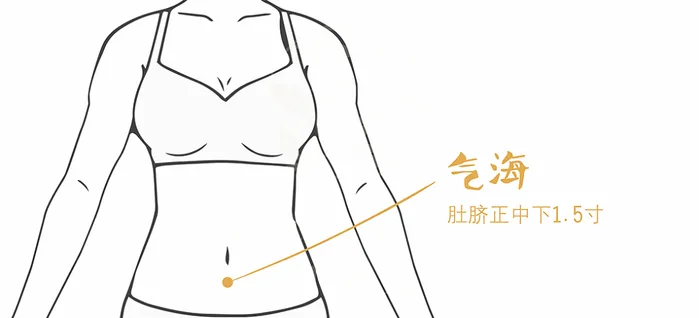
CV6 is on the midline of the lower abdomen, 1.5 cun (about two finger-widths) below the navel (umbilicus). It lies on the Conception Vessel (Ren Mai). As a lower-midline point, it is classically treated with extra care during pregnancy.
Three quick confirmations you have the right spot: (1) it sits on the exact midline, about two of your own finger-widths below the navel; (2) it is soft tissue, closer to the navel than to the pubic bone; (3) gentle pressure may produce a sense of warmth or a mild "pull," but never a sharp pain.
When to Use CV6 (and When Not)
Use it when
- • You feel persistently tired, drained, or run down
- • Digestion feels sluggish or the belly feels bloated
- • You want a daily immune-maintenance point during cold season
- • You tend to feel cold, or you are recovering from an illness
Hold off if
- • You are pregnant — CV6 is generally avoided during pregnancy
- • You have had recent abdominal surgery or have a hernia near the navel
- • The bladder is full, or you have just eaten a heavy meal
- • The lower abdomen is painful to the touch or the pain is unexplained
Use the Hold off column as a safety filter: CV6 is a restorative, maintenance point, not first aid — and persistent, unexplained fatigue deserves a medical checkup.
What Are the Benefits?
- Vitality and energy: CV6 is the classic point for restoring qi and is used for general fatigue, weakness, and debility.
- Digestive health: It strengthens digestion, relieves bloating, and helps with chronic loose stools.
- Immune support: Regular stimulation of CV6 is believed to strengthen defensive energy and resistance to illness.
- Feeling cold: Used in the traditional model when the person generally runs cold or lacks inner warmth.
- Recovery: A foundational point for rebuilding energy after illness, stress, or prolonged tiredness.
How Do You Use This Point?
Wait at least 30 to 60 minutes after eating, and avoid pressing over surgical scars. The point responds best to light, slow, breath-matched pressure.
Step-by-step technique
- Lie on your back with your abdomen relaxed and uncovered.
- Place two or three fingertips on the CV6 point below the navel.
- Apply gentle, warm pressure in a clockwise circular motion.
- Breathe deeply into your lower abdomen for 2–3 minutes.
- Repeat once or twice daily, preferably in the morning.
Common mistake to avoid: pressing hard into a full belly or tensed abdomen. CV6 works with light, breath-matched circles on a relaxed abdomen — forcing the pressure creates discomfort without adding benefit.
Combine CV6 with These Points
An energy or digestive routine is more effective than pressing one point. Pick the row closest to your situation and work the points in the order shown, 1–2 minutes each.
| Goal / symptom | Routine (in order) |
|---|---|
| Fatigue / low energy | CV6 → CV4 (Guanyuan) → ST36, 1–2 min each, in the morning |
| Sluggish digestion / bloating | CV6 → ST36 → CV12, after waiting 30–60 minutes past a meal |
| Low immunity / run-down | CV6 → ST36 → LI4, once daily during cold season |
| Feeling cold / recovery | CV6 → KI1 → ST36, then a warm compress over CV6 |
For a fuller program, see the abdomen acupressure points body guide and our acupressure for sleep page for a grounding wind-down routine.
What to Expect
First session (today)
The point may feel slightly tender, and most people notice a warmer, more relaxed sensation in the lower abdomen within a few minutes of light circular pressure. Do not expect an instant energy boost — CV6 is a restorative, cumulative practice.
Days 3–7 (consistent daily practice)
With 1–2 sessions per day, the abdomen usually feels warmer and more settled, and some people report waking less drained and digesting more comfortably. This matches the pattern in studies of acupressure for fatigue, where benefits appear after several days of regular use.
Weeks 2–4
For chronic fatigue, keep CV6 as part of a routine that includes sleep, nutrition, and movement. Acupressure is a complement, not a replacement — and if exhaustion, weight loss, fever, or night sweats persist, that is a signal to see a clinician rather than continue self-treatment.
What Does the Research Say?
Evidence on acupressure for fatigue, immune, and digestive complaints has grown in recent years. Systematic reviews and randomized controlled trials have examined acupressure as an adjunct for fatigue and energy restoration, with results that are generally promising but limited in quality. Lower-abdominal and midline points such as CV6 are among the most commonly studied in these protocols, often combined with warmth-based approaches.
Researchers consistently note that acupressure trials are hard to blind, because the treatment is physical and participants can usually tell whether they are being treated. This makes it difficult to separate the specific effects of a particular point from the general benefits of touch, pressure, and relaxation. The overall picture — which we discuss in detail on our does acupressure work? review — is one of encouraging signals alongside a clear need for larger, higher-quality studies before firm conclusions can be drawn.
Acupressure has been evaluated in clinical trials for pain, nausea, anxiety, and sleep, with evidence described as promising but requiring further high-quality research.
— Lee EJ, Frazier SK. Journal of Pain and Symptom Management. 2011;42(4):589-603. PMID 21531533.
Verifiable sources
- Lee EJ, Frazier SK. The efficacy of acupressure for symptom management: a systematic review. Journal of Pain and Symptom Management. 2011;42(4):589-603. PMID 21531533 · DOI
The review above evaluated acupressure for symptom management, including energy and digestive complaints. It is not a study of CV6 in isolation.
Are There Safety Concerns?
- Avoid during pregnancy: CV6 stimulation is generally avoided during pregnancy.
- Do not apply pressure over a full bladder or immediately after heavy meals.
- Avoid if you have abdominal surgery scars or hernias in the area.
- Skip the point if there is skin irritation, a rash, or an open wound on the lower abdomen.
- Use gentle pressure — the abdomen is sensitive, especially after surgery.
Red Flags — See a Professional
Stop self-treatment and see a doctor if you notice any of the following:
- Persistent fatigue with unexplained weight loss, fever, or night sweats
- Unexplained or worsening pain in the lower abdomen
- Blood in the stool, or black, tarry stools
- Feeling faint, dizzy, or short of breath with tiredness
- Exhaustion that has not improved after 2–3 weeks of rest, nutrition, and acupressure
Frequently Asked Questions
How do I find CV6 on myself?
How long and how often should I press CV6?
When is the best time to stimulate CV6?
Is CV6 safe during pregnancy?
When should I see a doctor instead of using CV6?
Related guides: acupressure for menstrual cramps and fertility.