ST36 (Zusanli) — Leg Three Miles
ST36, known as Zusanli or Leg Three Miles, is a Stomach meridian point on the lower leg. It is a major point for digestive health, energy, immune support, and leg weakness — and one of the most commonly used points in both acupuncture and acupressure traditions.
At a Glance
| Meridian | Stomach (ST) |
|---|---|
| Body region | Lower leg, just below the knee on the outer shin |
| Best for | Digestion, fatigue, immune support, leg weakness |
| Difficulty | Easy to reach yourself while seated |
| Hold time | 30–60 seconds per leg (up to 2–3 minutes in a full session) |
| Frequency | 1–2 times daily |
| Pairs well with | SP6 (Sanyinjiao), CV12, KI1 (Yongquan) |
| Skip if | Recent injury to the shin or lower leg (see Precautions) |
Why ST36 Matters
ST36 is often called the master point for digestive health in TCM. It sits on the Stomach meridian, which runs down the front of the leg, and its position — just below the knee, outside the shinbone, in a fleshy pocket of muscle — makes it both powerful and easy to reach. Because it is so accessible, it is one of the most frequently used points in daily self-care routines for energy, appetite, and recovery.
In TCM, ST36 builds Qi and supports the Stomach and Spleen, the organ pair behind appetite, peristalsis, and general digestive weakness. Strong digestive energy is seen as a foundation for a calm mind as well as a working gut — which is why ST36 appears in routines for fatigue, immune support, and even stress. Classically it is also used for weakness and tiredness of the legs, making it a point for the whole body rather than the belly alone.
Where Is This Point Located?
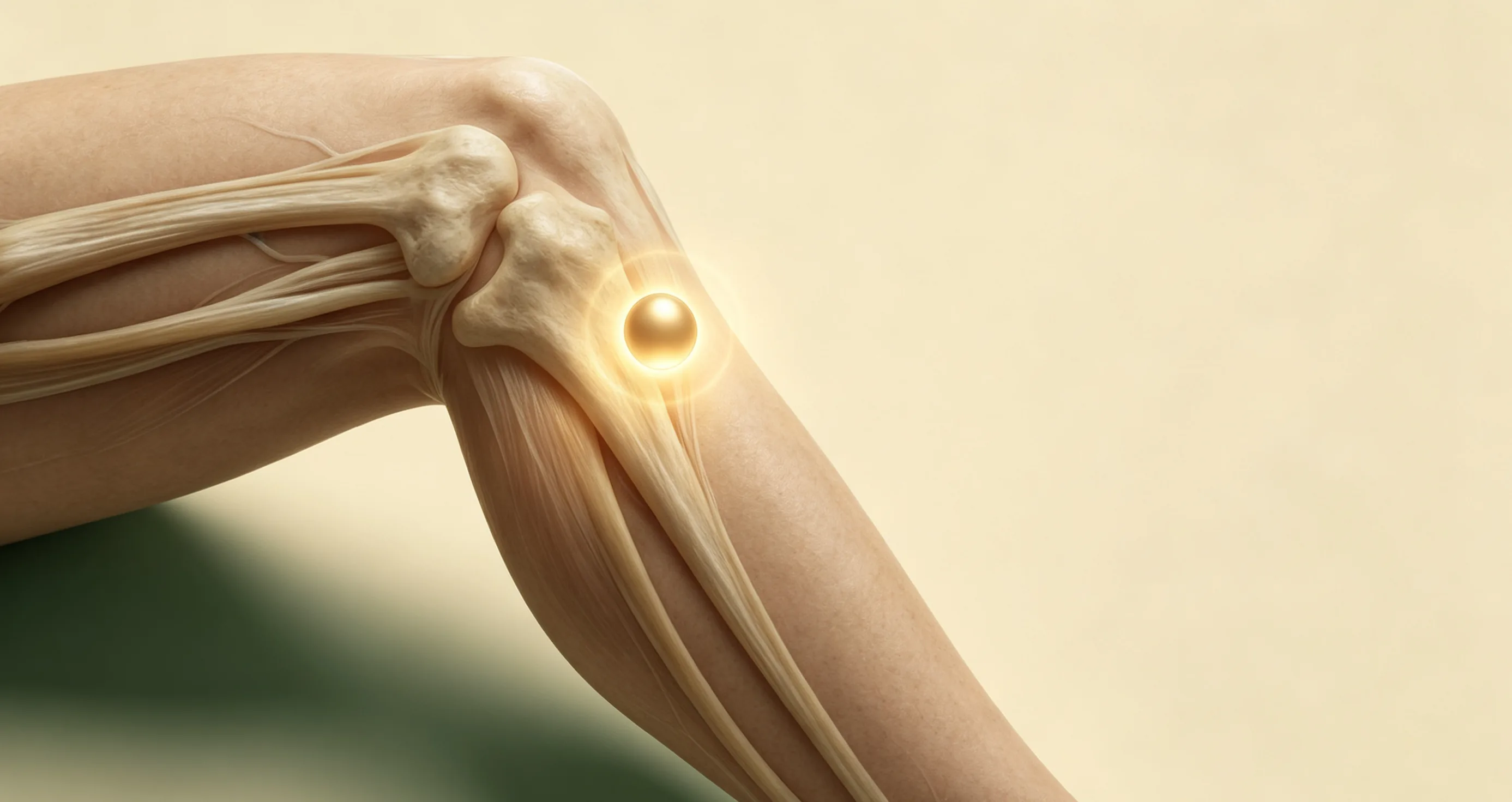
ST36 is located on the lower leg, 3 cun (about four finger-widths) below the lower edge of the kneecap, one finger-width lateral (toward the outside) from the front crest of the shinbone (tibia), on the Stomach meridian. To find it, slide four finger-widths down the outer edge of the shinbone and press just outside the bone, in the fleshy belly of the tibialis anterior muscle.
Three quick confirmations you have the right spot: (1) it sits one finger-width outside the sharp front edge of the shinbone, not on the bone itself; (2) pressing into the muscle produces a deep, dull ache that may travel down the leg toward the foot; (3) wiggling the ankle while pressing confirms you are in the belly of the muscle, not on the tendon.
When to Use ST36 (and When Not)
Use it when
- • You feel bloated, heavy, or sluggish after meals
- • Your energy dips mid-afternoon or you feel run down
- • Your legs feel weak, heavy, or tired after standing or walking
- • You want a daily maintenance point through cold season
Hold off if
- • You recently injured the shin, knee, or lower leg
- • The lower leg is bruised, swollen, or has broken skin
- • You have significant varicose veins right over the point
- • Pressing causes sharp, shooting pain or numbness down the leg
Use the Hold off column as a safety filter: ST36 is a comfort practice for digestion and energy, not first aid for a leg injury.
What Are the Benefits?
- Digestive health: ST36 regulates the digestive system — it is used for bloating, indigestion, nausea, and poor appetite.
- Energy and vitality: Known as a Qi-building point, it helps combat fatigue and general weakness.
- Immune support: Regular stimulation supports the immune system and increases resistance to illness.
- Longevity: In traditional Chinese medicine, ST36 is considered a longevity point that supports overall health and vitality.
- Leg strength: It is traditionally used for weakness, heaviness, and tiredness of the lower limbs.
How Do You Use This Point?
Because the calf muscles are large, ST36 tolerates firm, sustained pressure, and you may feel a dull ache or a sensation traveling down the leg. Work in slowly until the pressure feels deep and even.
Step-by-step technique
- Sit with your knee bent and foot flat on the floor.
- Place your thumb on the ST36 point on one leg, just outside the shinbone.
- Apply firm pressure using a circular kneading motion or a steady push.
- Hold for 30–60 seconds (up to 2–3 minutes for a fuller session) while breathing deeply.
- Release slowly, switch legs, and repeat once or twice daily.
Common mistake to avoid: pressing on the sharp front edge of the shinbone itself, which is painful and misses the point entirely. Slide one finger-width outside the bone into the muscle belly — the target sensation is a deep, dull, spreading ache, never a sharp edge-on-bone pinch.
Combine ST36 with These Points
ST36 is at its best in combination. Pick the row closest to your situation and work the points in the order shown, 30–60 seconds each.
| Goal / symptom | Routine (in order) |
|---|---|
| Digestion and bloating | ST36 → SP6 → CV12, 30–60s each, after meals |
| Fatigue and low energy | ST36 → KI1 → SP6, holding each 60s, morning and evening |
| Immune support | ST36 → LI4 → LI11, 1–2 times daily through cold season |
| Leg weakness | ST36 → SP6 → KI1, then gentle calf raises and walking |
For a fuller program, see the leg acupressure points body guide and pair ST36 with SP6 (Sanyinjiao) for digestion and sleep.
What to Expect
First session (today)
ST36 is often pleasantly tender, and pressing it usually brings a deep, warming release within a minute. Some people notice a lighter, more settled stomach and a small energy lift after the first session, though the effects of a single press are subtle.
Days 3–7 (consistent daily practice)
With 1–2 sessions per day, digestion often feels calmer and the mid-afternoon dip less steep. This matches the pattern in studies of acupressure for digestive and energy-related complaints, where benefits appear after several days of regular use.
Weeks 2–4
For chronic fatigue or persistent digestive issues, treat ST36 as part of a broader routine — sleep, meals, hydration, and movement. Acupressure is a complement, not a replacement: if fatigue is persistent or unexplained, or digestive symptoms worsen, see a clinician.
What Does the Research Say?
Evidence on acupressure for digestive and energy-related complaints has grown in recent years. Systematic reviews and randomized controlled trials have examined acupressure as an adjunct for these conditions, with results that are generally promising but limited in quality. Meta-analyses of acupressure for gastrointestinal symptoms tend to show a positive direction of effect, though many of the included studies are small and their methodological quality varies considerably.
Researchers consistently note that acupressure trials are hard to blind, because the treatment is physical and participants can usually tell whether they are being treated. This makes it difficult to separate the specific effects of a particular point from the general benefits of touch, pressure, and relaxation. The overall picture — which we discuss in detail on our does acupressure work? review — is one of encouraging signals alongside a clear need for larger, higher-quality studies before firm conclusions can be drawn.
Acupressure has been evaluated in clinical trials for pain, nausea, anxiety, and sleep, with evidence described as promising but requiring further high-quality research.
— Lee EJ, Frazier SK. Journal of Pain and Symptom Management. 2011;42(4):589-603. PMID 21531533.
Verifiable sources
- Lee EJ, Frazier SK. The efficacy of acupressure for symptom management: a systematic review. Journal of Pain and Symptom Management. 2011;42(4):589-603. PMID 21531533 · DOI
- Song HJ, Seo HJ, Lee H, Son H, Choi SM, Lee S. Effect of self-acupressure for symptom management: a systematic review. Complementary Therapies in Medicine. 2015;23(1):68-78. PMID 25637155 · DOI
The reviews above evaluated acupressure for symptom management, including digestive and energy complaints. Neither is a study of ST36 in isolation, but ST36 is among the most frequently used points in these trials.
Are There Safety Concerns?
- Avoid if you have a recent injury to the shin, knee, or lower leg.
- Do not massage directly over a bruise, wound, rash, or infection on the lower leg.
- Avoid deep pressure over significant varicose veins in the area.
- Stop if you experience sharp pain, numbness, or discomfort radiating down the leg.
Red Flags — See a Professional
Stop self-treatment and see a doctor if you notice any of the following:
- Leg pain that started suddenly after an injury, or an inability to bear weight
- A painful, swollen, red, or warm calf, which can signal a blood clot and needs urgent evaluation
- Numbness, tingling, or weakness in the leg or foot
- Persistent or unexplained fatigue, or unintentional weight loss
- Digestive symptoms that do not improve after 2–3 weeks, or are accompanied by bleeding, fever, or severe pain
Frequently Asked Questions
How do I find ST36?
How long and how often should I press ST36?
Can ST36 help with digestion and fatigue?
Can I press ST36 at work?
When should I stop ST36 and see a doctor?
Related guides: acupressure for menstrual cramps, constipation, and weight loss.