LI20 (Yingxiang) — Welcome Fragrance
LI20, known as Yingxiang or Welcome Fragrance, sits beside the nostrils and is the classic acupressure point for nasal congestion, sinus pressure, and facial pain. Two fingertips pressing gently upward and outward for thirty to sixty seconds is the standard technique.
At a Glance
| Meridian | Large Intestine (LI) |
|---|---|
| Body region | In the small hollow beside each nostril, where the nose meets the cheek |
| Best for | Nasal congestion, sinus pressure, allergic rhinitis, facial pressure |
| Difficulty | Very easy — beside each nostril, no anatomy to learn |
| Hold time | 30–60 seconds per side |
| Frequency | A few times daily, as needed |
| Pairs well with | LI4 (Hegu), GB20 (Fengchi), Yintang |
| Skip if | Recent nose surgery (including rhinoplasty), or broken skin on or inside the nose (see Precautions) |
Why LI20 Matters
LI20 is the face's congestion point. It sits on the Large Intestine meridian, and classical practice reaches for it whenever the nose feels blocked — nasal congestion, sinus pressure, facial pain, and the stuffiness of colds and allergies. Its name, Welcome Fragrance, hints at helping the nose take in breath and scent again.
Because it sits beside the nostrils, LI20 is one of the easiest points on the body to find and press — you can use it at a desk, in a car, or before bed without any preparation. It appears routinely in face and sinus routines alongside Yintang between the brows and points on the hands and neck, which is why it is often the first point people reach for when congestion makes breathing and sleeping uncomfortable.
Where Is This Point Located?
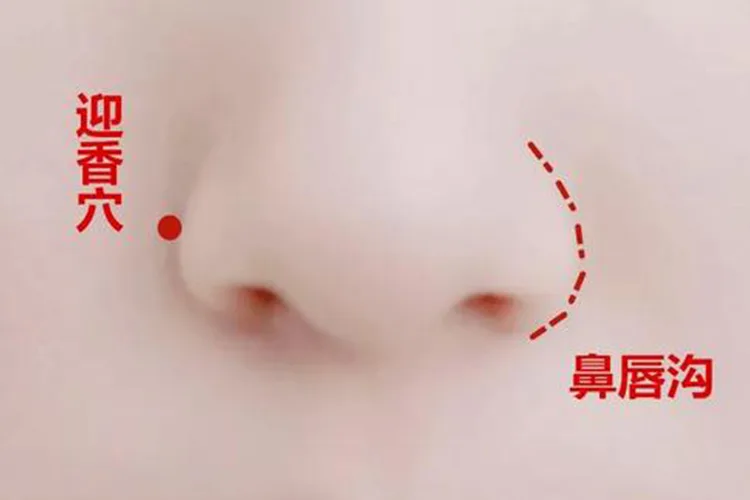
LI20 is in the small indentation beside the nostrils, at the side of the nose where it meets the cheek — roughly half a finger width out from the midpoint of the nostril wing, in the nasolabial groove. Press a fingertip into the hollow just outside each nostril; the correct spot feels achy and sits in a slight hollow.
Three quick confirmations you have the right spot: (1) the hollow sits just outside the nostril where the side of the nose meets the cheek, not on the cheekbone or on the nose itself; (2) pressing upward and outward produces a gentle, achy sensation that may make you want to breathe in deeper; (3) the more congested side of your nose usually has the more sensitive spot.
When to Use LI20 (and When Not)
Use it when
- • Your nose is blocked and you want to breathe more easily
- • Sinus pressure or facial fullness is building during a cold or allergy flare
- • Allergic rhinitis — sneezing, a runny or itchy nose
- • You want a quick, discreet comfort break before sleep or during the day
Hold off if
- • You recently had nose surgery, including a rhinoplasty
- • There is broken skin, a cold sore, or a healing wound on or around the nose
- • You have a fever, facial swelling, or pain over the sinuses
- • You are having an active or frequent nosebleed
Use the Hold off column as a safety filter: LI20 is a comfort practice for congestion, not a decongestant or a treatment for a sinus infection.
What Are the Benefits?
- Nasal congestion: LI20 is the classic point for a blocked nose and opens the nasal passages.
- Sinus pressure: It is described as useful for easing the pressure of congestion.
- Facial pain: Alongside Yintang and LI4, it appears routinely in routines for sinus congestion and facial pressure.
- Cold and allergy symptoms: The stuffiness of colds and seasonal allergies is a traditional target.
- Gentle comfort: The face guide frames this as a comfort practice rather than a decongestant.
How Do You Use This Point?
Facial work favors a light, precise touch. Keep nails short and never press inside the nostrils or on the eyeballs.
Step-by-step technique
- Place two fingertips on LI20 beside each nostril.
- Press gently upward and outward for thirty to sixty seconds.
- Breathe lightly and evenly while you hold the pressure.
- Build toward a soft, deep ache (the deqi response) with far less force than the legs or feet demand.
- Release slowly, work both sides evenly, and repeat a few times a day.
Common mistake to avoid: pressing too hard, or pressing on the eyeball or inside the nostril. The face is delicate — the target is a soft, deep ache from a light fingertip, and both sides should be worked evenly rather than digging in on one side.
Combine LI20 with These Points
A congestion routine works better than pressing one point. Pick the row closest to your situation and work the points in the order shown, 30–60 seconds each.
| Goal / symptom | Routine (in order) |
|---|---|
| Blocked nose / sinus congestion | LI20 → Yintang → LI4, 30–60s each, repeat 2–3 times daily |
| Allergic rhinitis flare | LI20 → GB20 → LI4, gentle holds, plus your usual allergy care |
| Congestion with frontal head pressure | LI20 → Yintang → GB20, holding each 30–60s |
| Stuffy nose before sleep | LI20 + Yintang, gentle, with a few slow breaths before lying down |
For a fuller program, see the face acupressure points body guide and our acupressure for headache page for sinus-related head pressure.
What to Expect
First session (today)
The nasal passages often feel easier within a minute or two of pressing LI20. Relief can be temporary — if the congestion comes from an infection or an allergy, it will return until the underlying cause clears. Do not expect a single press to open the nose for hours.
Days 3–7 (consistent daily practice)
Repeated gentle use a few times a day tends to keep sinus pressure lighter and makes breathing feel less effortful. This is comfort support — it does not replace your usual allergy or cold care, and it cannot clear an infection by itself.
Weeks 2–4
For seasonal allergies, a daily routine through the season works better than occasional pressing. Persistent sinus pain, fever, or congestion that lasts more than about 10 days needs a clinician's review rather than more self-treatment.
What Does the Research Say?
Research on facial acupressure is limited, and most support for LI20 comes from traditional practice rather than large clinical trials. Systematic reviews of acupressure for pain and respiratory complaints show generally promising but mixed-quality evidence, and the specific point is rarely isolated in trials — the strongest signals come from broader studies of manual stimulation for congestion and discomfort. You can read a fuller assessment of what this evidence does and does not show on our does acupressure work? page.
The honest framing is that LI20 is a comfort practice rather than a decongestant — it cannot clear an infection or an allergy by itself. Used alongside usual care, gentle facial pressure can help with stuffiness and sinus pressure, but persistent sinus pain or fever still needs a clinician's review.
Acupressure has been evaluated in clinical trials for pain, nausea, anxiety, and sleep, with evidence described as promising but requiring further high-quality research.
— Song HJ, Seo HJ, Lee H, Son H, Choi SM, Lee S. Complementary Therapies in Medicine. 2015;23(1):68-78. PMID 25637155.
Verifiable sources
- Song HJ, Seo HJ, Lee H, Son H, Choi SM, Lee S. Effect of self-acupressure for symptom management: a systematic review. Complementary Therapies in Medicine. 2015;23(1):68-78. PMID 25637155 · DOI
The review above assessed self-acupressure across allergic and respiratory complaints. It is not a study of LI20 in isolation, but LI20 is the point most commonly used for nasal congestion.
Are There Safety Concerns?
- Keep pressure light — facial points need far less force than the legs or feet.
- Never press the eyeballs or the inside of the nostrils.
- Skip the point if the area is irritated or after recent facial or nasal surgery, including rhinoplasty.
- Wash your hands before pressing near the nose.
- Persistent sinus pain or fever needs a clinician's review.
Red Flags — See a Professional
Stop self-treatment and see a doctor if you notice any of the following:
- Fever, facial swelling, or pain over the sinuses
- Green or bloody nasal discharge that persists
- Vision changes, double vision, or swelling around the eye
- Congestion that lasts more than about 10 days or keeps coming back
- Frequent or hard-to-stop nosebleeds
Frequently Asked Questions
How do I find LI20 on myself?
How long and how often should I press LI20?
Can LI20 help with allergies and sinus congestion?
Is LI20 safe during pregnancy?
When should I see a doctor instead?
Related guides: acupressure for sinus pressure.