GB21 (Jianjing) — Shoulder Well
GB21, known as Jianjing or Shoulder Well, is a Gallbladder meridian point on the top of the shoulder. It is the primary point for releasing shoulder and neck tension, and a go-to for desk workers, neck pain, and shoulder pain.
At a Glance
| Meridian | Gallbladder (GB) |
|---|---|
| Body region | Top of the shoulder, on the upper trapezius |
| Best for | Shoulder and neck tension, neck pain, shoulder pain, tension headaches |
| Difficulty | Easy to reach yourself from the opposite side |
| Hold time | 30–60 seconds per side |
| Frequency | 1–3 times daily |
| Pairs well with | SI9 (Jianzhen), LI15 (Jianyu), GB20 (Fengchi) |
| Skip if | Pregnant (traditional contraindication), or recent neck/shoulder injury (see Precautions) |
Why GB21 Matters
GB21 sits in the belly of the upper trapezius, the muscle that takes the brunt of desk posture and everyday stress. It is the most important point for neck and shoulder tension because it releases the trapezius, often the primary source of neck pain. Its name, Jianjing, meaning Shoulder Well, describes its position at the highest point of the shoulder, where classical practice treats it as the primary point for upper back and shoulder tension and for tension headaches that originate there.
Because GB21 sits on the Gallbladder meridian — which runs down the side of the body and up through the neck — it is classically linked to the whole neck–shoulder girdle rather than one muscle. It is also easy to reach with the opposite hand, which makes it one of the most practical points for people who hold tension in their shoulders all day at a desk, behind a wheel, or during long travel.
Where Is This Point Located?
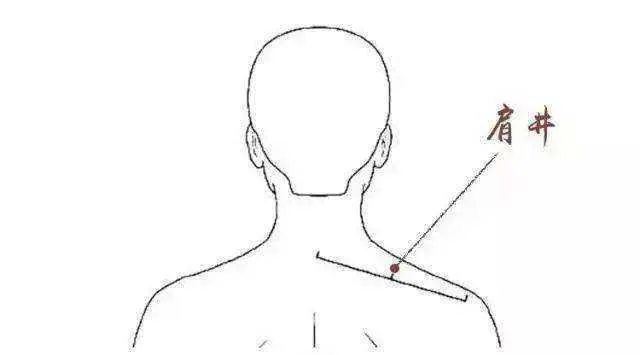
GB21 is on the top of the shoulder, midway between the spinous process of the seventh cervical vertebra (C7 — the prominent bone at the base of the neck) and the acromion (the tip of the shoulder). In practice, shrug the shoulder and place the thumb on the highest point of the muscle that rises up — the belly of the upper trapezius, roughly above the nipple line.
Three quick confirmations you have the right spot: (1) it is the single most tender point on the top of the shoulder, at the crown of the muscle that bunches when you shrug; (2) pressing it produces a deep, achy sensation that may spread toward the neck or down the upper arm; (3) it sits clearly on muscle, not on the collar bone or the spine.
When to Use GB21 (and When Not)
Use it when
- • You feel tight, knotted shoulders after desk work, driving, or stress
- • Neck pain spreads up into the head or down toward the shoulder blade
- • You get tension headaches that start from the shoulders and neck
- • You want a daily maintenance point for the whole neck–shoulder girdle
Hold off if
- • You are pregnant — GB21 is a traditional contraindicated point
- • You recently injured the neck or shoulder, or had shoulder surgery
- • There is bruising, a rash, or broken skin over the point
- • Pressing causes numbness, tingling, or pain running down the arm
Use the Hold off column as a safety filter: GB21 is a comfort practice for chronic tension, not first aid for an acute neck or shoulder injury.
What Are the Benefits?
- Shoulder tension: GB21 releases tightness in the trapezius and levator scapulae muscles.
- Neck stiffness: It improves range of motion in the neck and relieves cervical tension.
- Headaches: GB21 helps with tension headaches originating from shoulder and neck tightness.
- Stress relief: Stimulating GB21 releases physical tension stored in the shoulders from stress.
- Arm and elbow pain: It can help with referred pain patterns down the arm from shoulder tension.
How Do You Use This Point?
Press with the thumb or the pad of three fingers of the opposite hand, straight down into the muscle. The upper trapezius is dense, so work in slowly until you feel a deep, spreading ache rather than surface-level squeezing.
Step-by-step technique
- Sit upright and relax the shoulders down and away from the ears.
- Use the thumb of one hand to reach across to the opposite shoulder.
- Locate GB21 at the highest point of the shoulder muscle.
- Apply firm pressure with your thumb in a kneading or circular motion.
- Hold for 30–60 seconds while breathing deeply, then repeat on the other side.
Common mistake to avoid: pinching or squeezing the muscle between thumb and fingers, which targets the skin instead of the point. Keep the thumb anchored in one spot and let the pressure sink slowly downward — and never press so hard that you feel a sharp pinch or can't breathe steadily.
Combine GB21 with These Points
A neck-and-shoulder routine is more effective than pressing one point. Pick the row closest to your situation and work the points in the order shown, 30–60 seconds each.
| Goal / symptom | Routine (in order) |
|---|---|
| Shoulder and neck tension | GB21 → GB20 → SI9, 30–60s each, repeat 1–2 times daily |
| Neck pain with stiffness | GB20 → GB21 → LI15, holding each 60s, then slow neck rolls |
| Tension headache | GB21 → GB20 → LI4, holding each 60s for up to 3 minutes total |
| Desk-worker prevention | GB21 + LI15 at midday and again before bed; pair with posture breaks every 30–45 minutes |
For a fuller program, see the shoulder acupressure points body guide and our acupressure for neck pain page.
What to Expect
First session (today)
GB21 is usually one of the most tender points on the body, so expect a strong, deep ache. Most people notice their shoulders drop a little and the neck feels freer within a few minutes, though tension can rebuild as the day goes on.
Days 3–7 (consistent daily practice)
With 1–2 sessions per day, tenderness at the point usually eases and turning the head often feels smoother. This matches the pattern in studies of acupressure for neck and shoulder pain, where benefits appear after several days of regular use.
Weeks 2–4
For chronic tension, pair GB21 with posture habits — screen height, chair support, and regular movement breaks. Acupressure is a complement, not a replacement: if headaches or neck pain persist beyond 2–3 weeks despite daily practice, see a clinician.
What Does the Research Say?
Evidence on acupressure for neck and shoulder pain has grown in recent years. Systematic reviews and randomized controlled trials have examined acupressure as an adjunct for pain conditions, with results that are generally promising but limited in quality. Meta-analyses of acupressure for pain tend to show a positive direction of effect, though many of the included studies are small and their methodological quality varies considerably.
Researchers consistently note that acupressure trials are hard to blind, because the treatment is physical and participants can usually tell whether they are being treated. This makes it difficult to separate the specific effects of a particular point from the general benefits of touch, pressure, and relaxation. The overall picture — which we discuss in detail on our does acupressure work? review — is one of encouraging signals alongside a clear need for larger, higher-quality studies before firm conclusions can be drawn. For neck and shoulder tension specifically, our acupressure for neck pain page and the shoulder acupressure points guide summarize the strongest available evidence.
Acupressure has been evaluated in clinical trials for pain, nausea, anxiety, and sleep, with evidence described as promising but requiring further high-quality research.
— Chen YW, Wang HH. Pain Management Nursing. 2014;15(2):539-550. PMID 23415783.
Verifiable sources
- Chen YW, Wang HH. The effectiveness of acupressure on relieving pain: a systematic review. Pain Management Nursing. 2014;15(2):539-550. PMID 23415783 · DOI
- Hsieh LL, Liou HH, Lee LH, Chen TH, Yen AM. Effect of acupressure and trigger points in treating headache: a randomized controlled trial. American Journal of Chinese Medicine. 2010;38(1):1-14. PMID 20128040 · DOI
The reviews above evaluated acupressure for pain and for headache, the conditions GB21 is most used for. Neither is a study of GB21 in isolation.
Are There Safety Concerns?
- Avoid during pregnancy: GB21 is a traditional contraindicated point — stimulation may trigger uterine contractions.
- Avoid if you have a recent neck or shoulder injury, rotator cuff tear, or shoulder surgery.
- Do not press over broken skin, moles, rashes, or lesions on the shoulder.
- Stop if pressure causes numbness, tingling, or radiating pain down the arm.
Red Flags — See a Professional
Stop self-treatment and see a doctor or physiotherapist if you notice any of the following:
- Neck or shoulder pain that appeared suddenly after a fall, twist, or heavy lift
- Numbness, tingling, or weakness running down the arm or into the hand
- A stiff neck with fever and severe headache, which needs urgent evaluation
- Dizziness or unsteadiness that comes with neck movement
- Pain that has not improved after 2–3 weeks of regular acupressure and gentle movement
Frequently Asked Questions
How do I find GB21 on my own shoulder?
Why is GB21 avoided during pregnancy?
How long and how often should I press GB21?
Can I press GB21 at work?
When should I see a professional instead of pressing GB21?
Related guides: acupressure for labor support (at term only) and neck pain.